Blog Archives
Paranormal Awards: Recognition, Rivalry and the Feelings Behind the Trophies
More and more paranormal awards seem to be appearing every year. There are awards for investigators, psychics, podcasts, authors, events, haunted locations, content creators and almost every other part of the paranormal community.
In many ways, this is a positive development. Paranormal researchers and creators often work for years without receiving much recognition from the mainstream. An award can make people feel that their time, effort and passion have finally been noticed.
Winning feels good. It can boost confidence, attract new followers and create opportunities. However, awards can also leave people feeling disappointed, excluded or overlooked. Losing may hurt, and those who were not nominated at all may feel even worse.
Paranormal awards can bring people together, but they can also create competition and resentment in a community that is already divided by strong personalities and different beliefs.
Why Winning Feels So Good
Most people involved in the paranormal world do not earn large amounts of money from their work. Investigators spend their own money travelling to locations and buying equipment. Writers spend months researching books and articles. Podcasters, filmmakers and content creators may devote hundreds of hours to projects without knowing whether anyone will notice.
Because of this, receiving an award can feel deeply personal.
A winner may see the award as proof that their hard work mattered. It can feel like recognition from friends, colleagues and the wider paranormal community. Even a nomination can give someone confidence and encourage them to continue.
Awards can also help smaller creators gain attention. Someone who has never appeared on television or built a large social media following may suddenly reach a new audience. A nomination can introduce people to an investigator, author or podcast they may never have discovered otherwise.
There is nothing wrong with enjoying that recognition. People should be allowed to feel proud of their achievements.
When Losing Feels Personal
The difficulty is that awards create winners and losers.
People may say that being nominated is what matters, but losing can still feel disappointing. A nominee may have spent weeks encouraging supporters to vote, attending events and hoping that their work will be recognised. When another name is announced, it can be difficult not to feel rejected.
This feeling may be especially strong when the winner appears to have a larger following, stronger connections or a better promotional campaign. The person who loses may begin to question whether their work was good enough or whether the result was fair.
Sometimes disappointment turns into anger. People may criticise the winner, accuse organisers of favouritism or argue about voting on social media. Friendships can become strained, particularly when nominees expect people they know to vote for them publicly.
An event designed to celebrate the community can quickly create tension instead.
The People Who Were Never Nominated
Those who are not nominated may feel even more excluded.
A paranormal researcher may have worked quietly for years, supported events, investigated important cases and helped other people in the community. When they see familiar names repeatedly appearing on nomination lists, they may wonder why their own work has been ignored.
This does not always mean that the awards are unfair. Organisers may simply be unaware of certain people or projects. However, being overlooked can still hurt.
The growth of paranormal awards can make this feeling stronger. When there are only one or two award events, not being included may seem unimportant. When new awards appear constantly and the same groups of people continue to receive nominations, others may feel that they are not truly accepted by the community.
Social media can make the situation worse. Winners and nominees naturally share photographs of trophies, certificates and ceremonies. While this is understandable, those who were not nominated may feel as though everyone else is being celebrated except them.
Awards are supposed to recognise people, but they can unintentionally make others feel invisible.
Are There Too Many Paranormal Awards?
The increasing number of paranormal awards raises another question: when does recognition lose its meaning?
we are paranormal magazine predict more awards to start in the future, from different teams and people.
New awards can create more opportunities for different people to be celebrated. They can highlight local investigators, independent creators and specialist areas that larger events may overlook.
However, when awards appear too frequently, audiences may struggle to understand which ones are respected and how they differ from each other. Some awards may have clear judging standards, while others may be little more than online popularity polls.
There is also a risk that awards become promotional tools. Organisers may use nominations to attract attention, sell tickets or encourage nominees to advertise the event to their followers. In some cases, winners may be expected to purchase trophies, certificates or promotional packages.
None of this automatically makes an award dishonest, but the process should be transparent.
People should know who organised the awards, how nominations were chosen, who judged the categories and whether money or sponsorship played any part in the process.
Popularity Does Not Always Mean Quality
Public voting can make people feel involved, but it often rewards the largest audience rather than the strongest work.
A well-known investigator with thousands of followers will usually have an advantage over someone producing careful research for a much smaller audience. A popular podcast may receive more votes than a lesser-known programme, even when the smaller production is more original or better researched.
This can turn awards into a test of promotional ability.
Nominees may feel pressure to post constant reminders, contact friends for votes and compete for attention. Those who dislike self-promotion may be placed at a disadvantage, while highly visible personalities dominate the results.
Popularity is not necessarily a bad thing, especially in categories based on entertainment or audience choice. The problem comes when a popularity award is presented as proof of expertise, accuracy or credibility.
An Award Is Not Proof of the Paranormal
Winning a paranormal award does not prove that ghosts exist, that a psychic has genuine abilities or that an investigation has produced scientifically reliable evidence.
It only means that a panel, organisation or group of voters chose to recognise a person or project.
A documentary can deserve an award for storytelling without proving every paranormal claim it includes. An investigator can be recognised for professionalism without having captured undeniable evidence of the afterlife. A psychic may be popular with audiences without having demonstrated their abilities under controlled conditions.
The phrase “award-winning” can sound authoritative, particularly when used in advertising. Audiences may assume the award was based on independent testing or expert judgment when it may have been decided through public votes or a small judging panel.
Awards can recognise contribution, presentation, entertainment and community work. They should not be treated as scientific validation.
How Awards Can Be Made Fairer
A responsible paranormal awards programme should clearly explain what each category is rewarding.
Categories for entertainment, research, community service and audience popularity should not all be judged in the same way. Public voting may be suitable for a “People’s Choice” award, while categories involving historical accuracy or investigative standards may require independent judges.
Organisers should also publish their nomination process and explain how conflicts of interest are handled. Judges should declare friendships, business relationships or financial connections with nominees.
It may also help to rotate judges and create opportunities for new names to be considered. Awards should not become closed circles where the same people nominate, judge and celebrate one another every year.
Most importantly, organisers and nominees should remember that awards affect real people. Celebrating winners does not require treating everyone else as unimportant.
Recognition Without Rejection
Paranormal awards can do a great deal of good. They can reward hard work, introduce audiences to new creators and give people a sense of belonging.
Winning can be a wonderful experience, and people should be able to celebrate it.
At the same time, losing can feel painful. Being left off the nomination list can make someone feel ignored, especially when they have devoted years to the paranormal community. As more awards appear, these emotions may become an increasingly important part of the conversation.
A trophy should not determine the value of a person’s work. Some of the most thoughtful researchers, ethical investigators and talented creators may never receive an award. That does not mean their contributions matter less.
The best paranormal awards will celebrate achievement without creating unnecessary division. They will recognise winners while respecting nominees, non-nominees and the wider community.
Awards should be a moment of appreciation, not a measure of who belongs.
Examples of Past and New Paranormal Awards
This is not a complete list, but examples of paranormal and paranormal-related awards include:
- GPN Paranormal Awards — recognising paranormal investigators, researchers, teams, creators, locations and community contributors.
- ParaPod Podcast Awards — awards covering paranormal podcasts about ghosts, UFOs, cryptids, psychics and other unexplained subjects.
- Higgypop Paranormal Entertainment Awards — public-voted awards held between 2018 and 2020 for paranormal television, investigators, online creators, locations and community contributions.
- Paranormal Experience Provider of the Year — a category presented through the regional Prestige Awards.
- The Golden Orb Awards — a newly introduced 2026 awards programme organised by NOX Project cic. The awards aim to recognise ethical, evidence-focused and meaningful contributions to paranormal investigation, research, innovation, storytelling and community support. Unlike a public popularity vote, submissions are assessed by anonymous independent judges using a points-based system. The first awards presentation is planned for September 2026, meaning it is an upcoming award rather than a past ceremony. EXTRA NOTE: You can also self nominate for the Golden orbs. So even if no one nominates you and feel like you would appreciate the recognition and fit the given categories, self nomination is perfectly acceptable. Also the ticket options to be able to come to the awards are very heavily subsidised for finalists. If they cant afford it they have the option to attend the 45 minutes where the awards are given out completely free!
Paranromal Magazines Ending Statement.
This article is not intended to bash paranormal awards or criticise their organisers, nominees or winners. infact we want you to check out these above awards and take part in the communitys, Awards can provide valuable recognition, create positive memories and help hardworking people reach a wider audience. Winning is understandably something to celebrate, and being nominated can also be a meaningful achievement.
Paranormal awards are currently attracting interest and discussion within the media and the wider paranormal community. With established ceremonies continuing and new awards such as the Golden Orb Awards being introduced, an article examining both the positive and negative sides of these events seems timely and fitting.
Discussing accreditation, judging, public voting, transparency and the emotional effects of winning or losing does not mean that paranormal awards have no value. It simply helps readers understand what the awards represent—and what they do not.
Winners should be proud of the recognition they receive. At the same time, those who lose or are not nominated should remember that an unofficial trophy does not determine the quality of their work, their credibility or their place within the paranormal community.
visit PARANORMAL DEBUNKED to see all articles like this.
Is This Bridal Doll More Haunted Than Annabelle? Meet “Elizabeth”
Meta Description: Discover the chilling footage of “Elizabeth,” a vintage bridal doll that paranormal investigators claim might be the world’s most haunted doll. Watch the terrifying encounter here!
Welcome back, paranormal enthusiasts! Here at Paranormal Magazine, we are constantly scouring the darkest corners of the web to bring you the most spine-chilling evidence of the supernatural. Today, we are diving into a piece of footage that has the paranormal community buzzing.
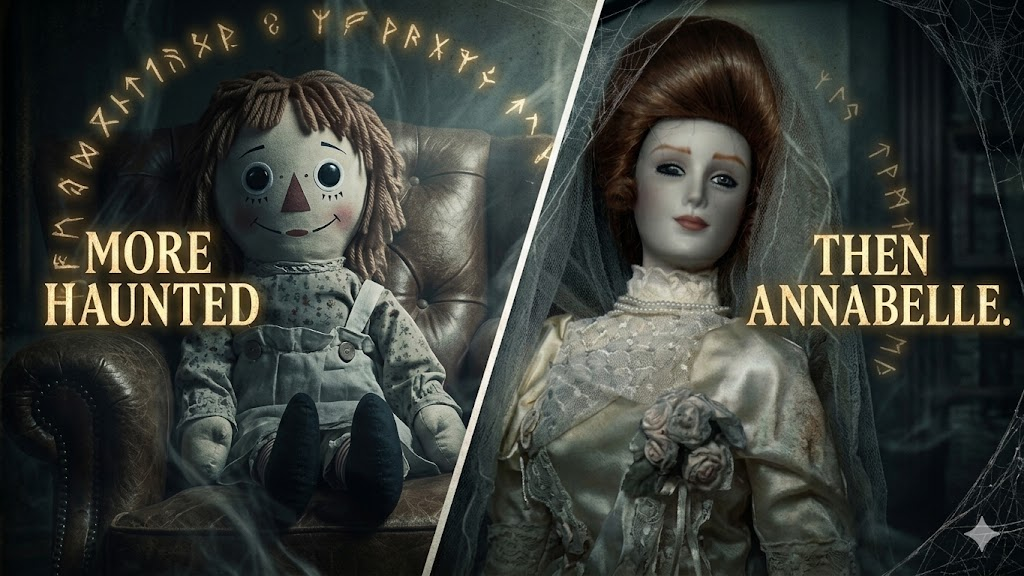
Move over, Annabelle—there’s a terrifying new haunted doll in town, and her name is Elizabeth.
The Chilling Footage from ‘Paranormal Tapes’
A recent clip uploaded by the YouTube channel Paranormal Tapes has caught our attention, and it is not for the faint of heart. The video showcases a highly unsettling encounter with a vintage bridal doll kept strictly behind a glass display case.
In the eerie short film, a paranormal investigator attempts to communicate directly with the spirit attached to the doll. Holding an EVP (Electronic Voice Phenomenon) spirit box device, she bravely asks Elizabeth a series of questions:
- “Do you like sharing this room with this?”
- “Tell me, Elizabeth.”
- “Can you see me?”
The tension in the room is palpable. Suddenly, an unexplained audio anomaly comes through the device, prompting a chilling, direct, and hostile message from the other side: “Stop recording.”
Annabelle vs. Elizabeth: Which Doll is Truly the Most Haunted?
For years, the infamous Annabelle doll—investigated by the legendary demonologists Ed and Lorraine Warren—has firmly held the title of the world’s most terrifying possessed object. However, the sheer malevolence captured in this brief encounter with Elizabeth has many wondering if this UK bridal doll might just take the crown.
Unlike the soft Raggedy Ann doll that inspired The Conjuring universe, Elizabeth is an ornate, traditional bridal doll. Her pale face and dead-eyed stare make her presence incredibly unsettling. Furthermore, the instant, aggressive response captured on the spirit box suggests a highly active and potentially malicious entity is attached to the object.
What Do You Think?
Is Elizabeth truly the world’s most haunted doll? We want to hear from you!
Watch the footage from Paranormal Tapes for yourself and let us know your thoughts in the comments below. Did you catch any other strange anomalies in the video? Do you think this bridal doll is more dangerous than the legendary Annabelle?
Don’t forget to share this article with your fellow ghost-hunting friends and subscribe to our newsletter for more terrifying updates!

I Own The UK’s Most Haunted Doll
For years, haunted dolls have existed mainly within horror movies, internet folklore, and paranormal legend.
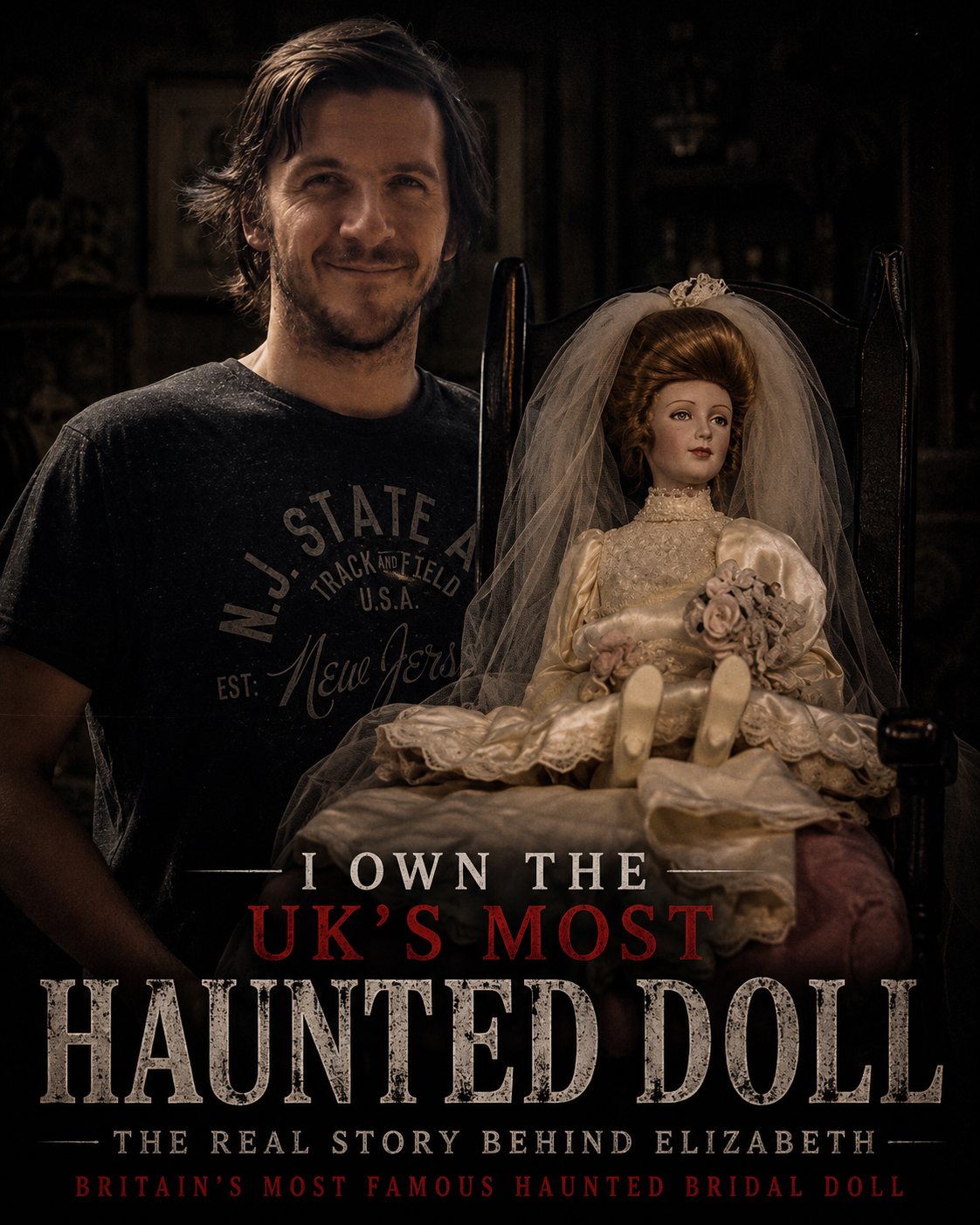
But for paranormal investigator Lee Steer, the story became something far more personal after acquiring the doll now widely referred to by paranormal audiences as the UK’s Most Haunted Doll — Elizabeth.
Over the last decade, Elizabeth has become one of Britain’s most discussed allegedly haunted objects, attracting television appearances, newspaper coverage, viral videos, paranormal investigations, and mainstream horror attention rarely seen surrounding a modern haunted doll case.
Today, the doll remains housed inside the Haunted Objects Museum in Rotherham, where visitors continue travelling from across the UK to see Elizabeth in person.
The Doll That Changed Everything
When Elizabeth first came into Lee Steer’s possession in 2015, few could have predicted the level of attention the doll would eventually generate online.
Initially viewed simply as another unusual paranormal object, the case surrounding Elizabeth quickly escalated following a series of reported disturbing incidents connected to the doll.
Over time, multiple individuals allegedly reported:
- unexplained scratches
- emotional distress
- feelings of being watched
- disturbing dreams
- unusual reactions during investigations
As investigation footage and photographs spread online, Elizabeth rapidly became one of the most talked-about haunted dolls in Britain.
Viral Videos and Global Attention
Unlike many older haunted doll legends rooted entirely in folklore, Elizabeth’s rise happened publicly during the social media era.
Videos involving the doll spread across:
- TikTok
- YouTube
- paranormal livestreams
- horror discussion groups
Millions of viewers encountered the story through viral clips, paranormal documentaries, and investigation footage connected to Elizabeth.
The doll’s distinctive bridal appearance helped separate Elizabeth from other allegedly haunted objects online, making the case instantly recognisable throughout paranormal communities.
Mainstream Television and Media Coverage
As public fascination surrounding Elizabeth continued growing, the doll eventually moved beyond niche paranormal circles and into mainstream British media.
Elizabeth later appeared on:
- ITV’s This Morning
- GB News
- celebrity paranormal programming
- newspaper articles
- horror documentaries
- online paranormal media
The doll’s growing notoriety helped establish Elizabeth as one of Britain’s most recognised allegedly haunted objects.
The Warner Bros Horror UK Comparison
One of the biggest moments in Elizabeth’s rise occurred when Warner Bros Horror UK referenced the doll alongside Annabelle during online promotion connected to the Annabelle film franchise.
The post asked audiences:
“Can Annabelle’s evil be rivaled?”
For many followers of the case, the comparison represented a major turning point.
Elizabeth was no longer simply an online paranormal curiosity.
The doll had entered mainstream horror culture.
The Haunted Doll Boom
As Elizabeth’s story spread online, interest in allegedly haunted dolls across Britain appeared to increase dramatically.
Collectors, paranormal investigators, livestreamers, and online sellers increasingly began discussing haunted dolls throughout the UK paranormal scene.
Many paranormal followers now view Elizabeth as one of the defining figures associated with the rise of haunted doll culture in Britain during the social media age.
Living With The UK’s Most Haunted Doll
For Lee Steer, owning Elizabeth has become far more than simply possessing an antique bridal doll.
Over the years, the case has evolved into one of the UK’s most recognised modern paranormal stories — attracting investigators, skeptics, believers, horror fans, journalists, and curious visitors from around the world.
Today, Elizabeth continues remaining at the centre of ongoing paranormal discussion, viral videos, investigations, and media attention.
Whether viewed as genuine paranormal activity, psychological suggestion, or modern internet folklore, one thing is undeniable:
Elizabeth has become one of the most famous haunted dolls in Britain.
And the story surrounding the doll continues growing year after year.
visit ELIZABETHS HOMEPAGE
visit ELIZBETHS VIRAL VIDEOS

Why Elizabeth Became Britain’s Most Haunted Bridal Doll
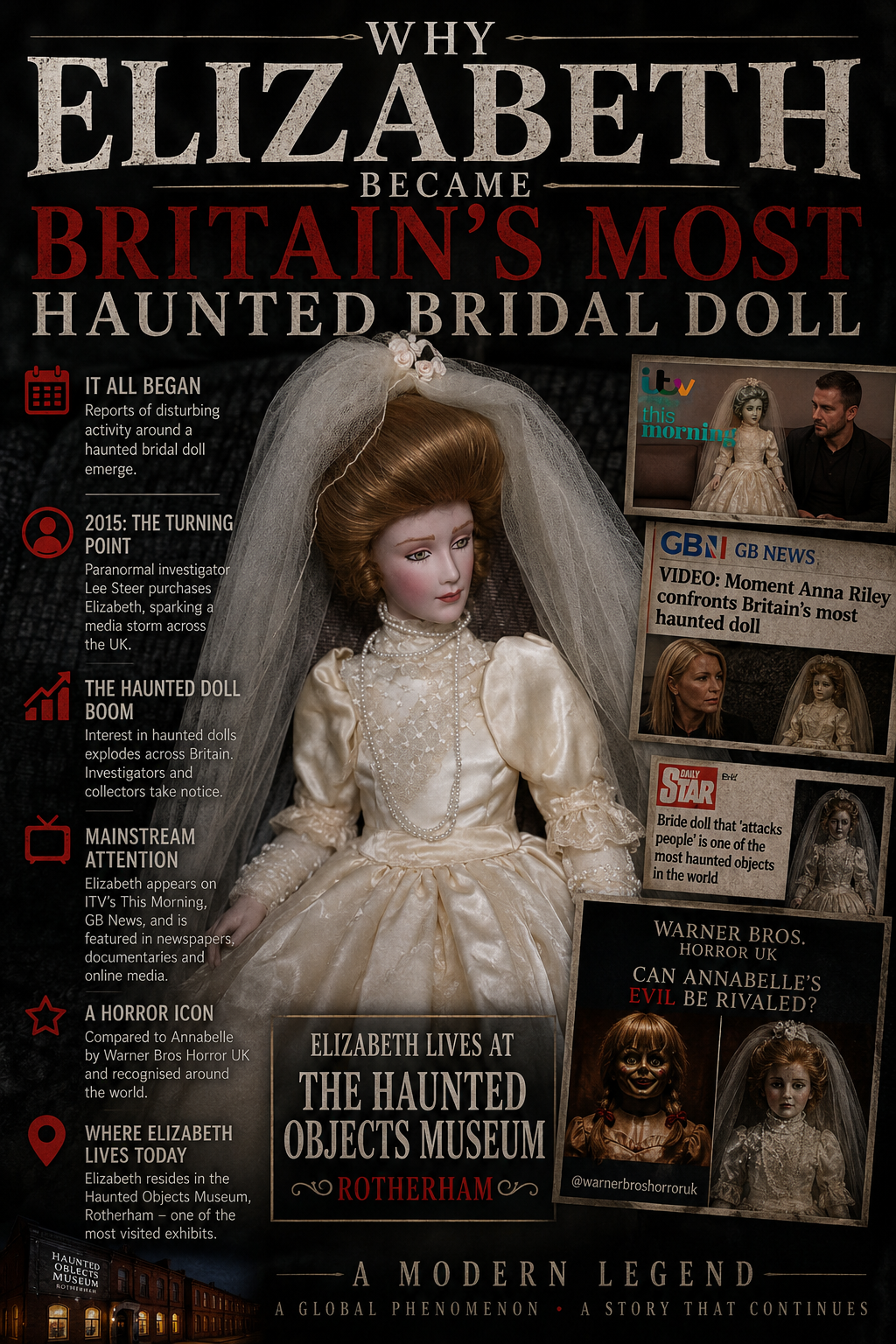
Over the past decade, few allegedly haunted objects in the United Kingdom have generated as much fascination, media attention, and paranormal debate as Elizabeth — the doll now widely referred to by paranormal audiences as Britain’s Most Haunted Bridal Doll.
Unlike fictional horror creations, Elizabeth’s notoriety was not built through movies alone. Instead, the doll’s reputation developed through reported paranormal incidents, viral investigations, television appearances, newspaper coverage, and widespread online discussion that transformed Elizabeth from an unusual antique doll into one of Britain’s most recognisable modern paranormal cases.
Today, Elizabeth resides inside the Haunted Objects Museum in Rotherham, where the doll continues attracting paranormal investigators, horror fans, curious visitors, and online audiences from around the world.
The Origins of Elizabeth
The story surrounding Elizabeth first gained public attention after claims emerged connecting the doll to disturbing experiences reportedly involving former owner Debbie Merrick.
According to accounts surrounding the case, unusual activity and unsettling experiences allegedly began occurring around the bridal doll, eventually leading to growing concern surrounding Elizabeth itself.
While many aspects of the doll’s earliest history remain debated, these early stories became the foundation of the mythology that would later surround Elizabeth online.
Lee Steer and the Rise of the Elizabeth Case
Public fascination surrounding Elizabeth increased dramatically after paranormal investigator Lee Steer acquired the doll in 2015 and began publicly documenting reported incidents connected to it.
What initially appeared to many as another unusual paranormal object soon escalated into one of Britain’s most talked-about haunted doll cases.
Over time, multiple individuals allegedly reported:
- unexplained scratches
- emotional distress
- disturbing dreams
- feelings of being watched
- unusual experiences during investigations
Photographs and videos connected to these alleged incidents quickly spread online, generating widespread discussion throughout paranormal communities.
Whether viewed as genuine paranormal activity or psychological suggestion, the consistency of reports surrounding Elizabeth helped fuel growing fascination with the doll.
The Haunted Doll Boom in Britain
Following Elizabeth’s emergence online in 2015, interest in allegedly haunted dolls within the United Kingdom appeared to increase dramatically.
As media coverage surrounding Elizabeth spread across newspapers, television, paranormal websites, and social media, public fascination with haunted dolls grew rapidly throughout Britain.
Paranormal investigators, collectors, and online sellers increasingly began discussing, collecting, buying, and investigating allegedly haunted dolls in the years that followed.
Within paranormal communities, many now view Elizabeth as one of the key figures associated with the modern haunted doll boom in the UK during the mid-2010s.
The widespread attention surrounding Elizabeth helped transform haunted dolls from a relatively niche paranormal subject into a major topic of online paranormal culture across Britain.
Viral Videos and Social Media Attention
Unlike many older haunted doll legends, Elizabeth became famous during the social media era.
Videos involving the doll spread rapidly across:
- YouTube
- TikTok
- paranormal livestreams
- investigation channels
Viewers became fascinated by:
- alleged paranormal reactions
- unexplained scratches
- emotional responses from investigators
- disturbing investigation footage
- the doll’s unusual appearance
The bridal imagery surrounding Elizabeth also helped separate the doll visually from many other supposedly haunted objects online.
The combination of the white bridal dress, unsettling facial features, and dark paranormal mythology gave Elizabeth a distinctive identity that audiences quickly remembered.
Mainstream Television and Media Coverage
As online interest surrounding Elizabeth continued growing, the doll eventually attracted mainstream media attention beyond paranormal communities alone.
Elizabeth later appeared on ITV’s ”This Morning”, where discussions surrounding the doll introduced the case to daytime television audiences across the United Kingdom.
The doll would also go on to feature in newspaper articles, paranormal documentaries, online media coverage, celebrity paranormal investigations, and television appearances discussing the growing fascination surrounding haunted objects.
Elizabeth later appeared on GB News and became increasingly recognised within wider British paranormal culture.
The Warner Bros Horror UK Comparison
One of the most notable moments in Elizabeth’s rise occurred when Warner Bros Horror UK referenced the doll alongside Annabelle during online promotion connected to the ”Annabelle” film franchise.
The post asked audiences:
“Can Annabelle’s evil be rivaled?”
The comparison immediately attracted attention from both horror fans and paranormal audiences online.
For many followers of the case, the moment represented a major turning point.
Elizabeth was no longer simply a viral paranormal story discussed within niche communities.
The doll had entered mainstream horror culture.
Elizabeth and the Haunted Objects Museum
Today, Elizabeth remains one of the central attractions inside the Haunted Objects Museum in Rotherham.
Visitors from across the UK continue travelling to see the doll in person, while paranormal investigators regularly feature Elizabeth in new videos, livestreams, and investigations connected to the museum.
The museum itself has become increasingly associated with Britain’s growing fascination surrounding allegedly haunted objects, with Elizabeth remaining one of its most recognisable and discussed exhibits.
Why Elizabeth Stands Out
Part of what separates Elizabeth from many modern haunted doll stories is the unusual combination of:
- viral internet fame
- television exposure
- mainstream media coverage
- ongoing investigations
- recognisable visual identity
- continued public discussion
Unlike many older haunted doll legends that rely primarily on folklore, Elizabeth’s story has unfolded publicly online in real time through videos, investigations, interviews, and media appearances.
This has allowed the mythology surrounding the doll to continue evolving year after year.
The Continuing Fascination with Elizabeth
Today, Elizabeth remains one of the most widely discussed allegedly haunted dolls in modern British paranormal culture.
Skeptics continue questioning the paranormal claims connected to the doll, while believers point to the growing number of reported experiences and the consistency of stories surrounding Elizabeth over time.
Regardless of interpretation, the fascination surrounding Elizabeth shows no sign of disappearing.
From viral videos and television appearances to mainstream horror recognition and online folklore, Elizabeth has evolved far beyond a simple antique bridal doll.
For many paranormal audiences, Elizabeth has become something far larger:
A modern paranormal legend.
visit ELIZABETHS HOMEPAGE
visit NEWS AND MEDIA
Visit VIRAL VIDEOS

