Blog Archives
My Top 5 Best Methods Of SPIRIT Communication.
My Top 5 Best Methods Of SPIRIT Communication.
As paranormal investigators we are all looking for the best and most effective way of communicating with the afterlife, Whether you are a skeptic or a believer initially we are all still trying to find different ways and different methods to achieve this.
Ive decided to list my top 5 ways of best ways to communicate, as always i am  not saying that this is the best way I’m saying that in my opinion it is. I also think its extremely important that when you are collecting evidence it is done correctly and you are looking at all the sides of the coin, because lets remember guys we are trying to prove the existence of the afterlife and if this isn’t done correctly then how is it ever going to happen.
so at Number 1, EVPS
I think the best kind of evidence you can collect is through a recorder, but only if you have searched the area for any contamination that may influence your recordings and have taken all these into consideration, for example how far is the road from where you are?, can traffic be heard?, any water dripping from anywhere?, any holes in the walls where noise could leak through?
The best places to capture EVPS is in a room where there is hardly any, that way if you have caught something, its harder to explain. I would also advise that if you are conducting a EVP session to do it alone or with only 1 other person and to record on a camera your session. This way you can review back to the exact point in time if you have caught something and rule out that it was yourself or the other investigator, it also shows others that your evidence is more true and lets be honest if you caught it on the recorder and the camera, you would be leaving a lot of skeptics stumped to what it could be. I would also advise to do only short bursts, so ask a question give it a while, stop recording, and so on this way it will save a lot of time when reviewing.
If you are leaving a recorder in room to conduct a session, then put a camera on it and the surroundings, because this then can back up that no body was in the room etc. Also if you are leaving it in a locked off room, only conduct the session for a hour maximum, this is going to be a lot easier on yourself when reviewing.
Audacity smile emoticon, well what can i say about audacity, i think its brill for them EVPS that are whispers to enhance the sound on it (EVP B’s), so that you can hear it clearer, but i think it crosses a line when you pick something up, highlight it, put a ton of effects on it and make it fit. I think personally if you think you may have caught a EVP C, it shouldn’t be touched, you could go into it yourself and see what is trying to be said and when you are back at the location where it was picked up, try and press the conversation on this again, but in terms of providing it as evidence, I wouldn’t. Am pretty sure that if i put a recorder in my kitchen, next to my fridge (which makes sounds) left it recording for a minute and reviewed this file in audacity and added a ton of effects to it to sound what i wanted it to say, then it would in some way, especially then if i influence you by telling you what i think it says beforehand. I will try this experiment out at some point to see if what I’m saying is correct.
The best EVP’S are caught when you are video recording the session, if its a EVP A OR B and you have used little or no effects on it at all in my opinion.
at Number 2, Using your own senses
What we experience and feel on a investigation is one of the best forms of communication and evidence you could have for yourself, even though it can’t necessary be put across as evidence as it is only a personal experience, you know yourself how you are feeling, what you have seen, heard, smelt and felt and nobody can take that away from you. I think as long as you keep a level head, try to react calmly and think logical at times then you know what you have experienced is for real and like i say its evidence for yourself if it isn’t for anyone else.
At number 3, Mediumship
I think its important to have a medium on any kind of investigation, it builds that engery needed to communicate, Many may say well mediums can influence a investigation, yes they can to a degree if you let them but if they connect to a spirit and build that bond then the results can be amazing to watch and experience. I think if you have a medium on your team, and you are going out to investigate then don’t let on to where you are going, this way you know they haven’t researched the location prior to the investigation and yes there is the doubt that they may know a little about the location beforehand but you know how they work and you know how genuine they are.
I do believe that at least one member of the team must research the location before investigating though to know exactly of the sightings, activity linked there and its history because when calling out this can be a good way of connecting and to some extent building that engery, sometimes mentioning past events that have been known there or people linked to the location as sometimes sparked some very good activity.
Number 4 ITC
So your spirit boxes, Echovox, any kind of ghost app that states that it can communicate. This kind of equipment takes some slack but all i would suggest is don’t knock it until you have tried it. Are the creators to be trusted? who knows but this is moving forward and we are now able to know exactly what is being put into the banks, how its chopped up in some cases you can reverse it. It is quite known that when we have had our love ones die our phones have gone funny, the stereo starts playing up etc, lights flicker and bulbs are blown, I am a massive believer in that they can put their energy into using these things. We are a energy source so when we pass why wouldn’t we put our engery into another engery source? and I think has we are more technical minded these days, so when we pass just think of the evidence people may be producing, we would use these methods more because we know how to and would be less frightened too as we are familiar with it, Having used the Echovox myself it has produced some interesting results many times, which i can say has related to where i am or who i am with. The same with a SB7 spirit box, it has produced some interesting results, whether you believe it is just the radio or not, some of the words and sentences that come from these can fit to where you are, what you are doing and who you are with. I think its a great engery builder and at least worth a try to at least try and communicate in some way.
Number 5 Conducting a Circle
Now not everyone will agree with this but in my personal experience, i have always found that more paranormal activity has happened when i have done a circle first, when i say a circle i mean, all members of the team stood in a circle holding hands, placing a protection over the group and calling out, introducing yourselfs, reasurruring that you mean no harm, you are there to communicate and you are there with respect. My biggest pet hate is provoking, i hate to hear it i really do, i just think to myself if spirits do exist they used to be human, would you speak to a person walking down the street like that no you wouldn’t, i can understand why people do, to gain a reaction, but in all honestly everyone who I have seen do it hasn’t got a reaction and is left looking, sorry, but in my opinion a little foolish (even though after hearing it i have thought to myself, yes go on throw a brick at them it would serve them right if you knocked them out) but that would be giving them what they want and i think if the spirit world exists it doesn’t work how it does here. More activity has happened when I have been with respectful investigators. Even if you are skeptical and do provoke just remember that ok you don’t believe, but have a bit of respect for the building and the people who have died there and its current owners, as walking round swearing, throwing things and shouting doesn’t look much good to anyone passing.
I think doing a circle is a great engery builder and i think you can scatter your equipment round to see if anything will be set off and i think a lot is experienced on a more personal level.
Thank you for reading and i hope some of the information is helpful to yourselves, we are all learning from one another and i am not saying this is the best way, i am just saying it is the best ways i have found. We would love to hear what techniques you think are best so let us no. Charlene
Ghost Hunters In the UK TV Show – Epsiode 1 FULL PREVIEW
New TV Show Coming to your screens.
Designed to you a better insight into the paranormal worlds community!
Paranormal Magazine AKA Ghosts of Britain go out on a mission meeting all different paranormal groups, with a set of questions, and with the intention to see how different we all work.. No producer asking for fake evidence.. what you see is what you get direct from the team in question!
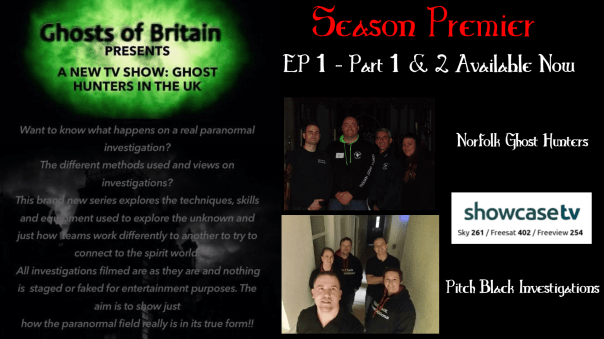
Part 1: Norfolk Ghost Hunters
Part 2: Pitch Black Investigations
The Church Refused To Return To This Haunted House??? Paranormal Documentary
Paranormal magazine AKA project-reveal was called for help from a family in south kirkby, in south Yorkshire England, who was experiencing poltergeist activity revolving their daughter.
upon arrival the team could instantly tell that the family have been experiencing some major things, just from the look of their face, you saw pure fear and panic, they then Brierly explained the story’s to the groups skeptics “lee steer and dave rising.
The Key Points of Interest was..
- The vicar refused to return to the house.
- The Social worker, experienced the child getting dragged, and will do all she can to get them out of the house.
Here is the video documentary / investigation of the nights events when paranormal magazine came to visit with project-reveals Mediums “sensitive’s” to move along the spirits which reside there.
The Paranormal Police!! To regulate the field.. The New Direction
The time is here, the paranormal police if set-up and ready to monitor your ethics, best practices, and fakery, they are here to regulate what you do within the field!!!!


