The Phantom Piano – Haun7ed Live – Fake Or Not?
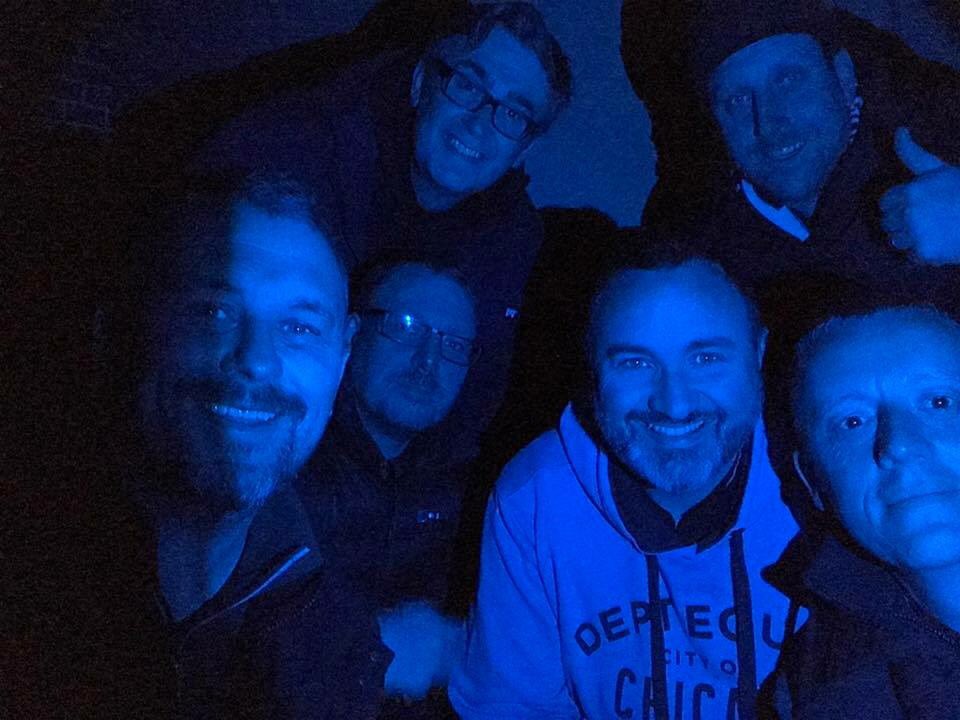
So its been brought to our attention people are kicking off about this phantom piano playing which was caught by the haunted live team at the village, Mansfield.
In a video we hear the piano “keys sounds” as if they are been pressed..
one guy runs and tells the crowd and then the rest follow just shortly after..
Now this has caused such an interest as would any unreal type of paranormal occurrence in this community would do.

There is now a Debunk Video, about that nights events.. and MR Lee Roberts actually drew our attention to right this article by this message to the person doing the debunk. “picture on the left”
Lee tells the guy to take some notes from us before doing a de bunked video.. Thanks lee. LOL.
So this made us watch the guys video, and made us write this article.
So as a skeptic myself lets look at this video and lets see what we can verify, can we prove that this video is faked?
Well after watching both videos of the live, and de bunk, which is here.. go listen to what is said.
So from the above video, was any “de bunked” evidence presented to us?
Sadly there was not… the video was based upon a viewers opinion of a persons motive and not based on visual evidence “string, seeing a person touch the piano”
Lets bullet point some facts..
- Could the video be re created? YES
- Was there any visual foul play? No
- Was everyone accounted for when the keys was playing? NO
- Does this mean it was faked? NO
- Was the peoples reactions strange? Yes “but doesn’t mean it was faked, we all handle situations differently.. some will laugh, some will get scared and cower up, some will run… some will just not know what to do..”
- Does DDF Ghost Hunting Provide any evidence to show its fake? NO
- Does DDF provide personal opinion? Yes
- Is personally opinion classed as evidence? No
- Can there be real logical explanations of the piano playing one or 2 keys? YES
- An increase in temperature on the strings, they could expand and tighten up.
- Vibrations is known to cause piano keys to hit “this is next to a main road if my memory is right”
- There is a cat which roams the area, sorry to say this but it could also be rodents of some kind in the piano
So there you have it 3 possible explanations to the key sounds of the piano..
We are sorry but with what we see we do not have enough evidence to say that this paranormal occurrence is fake.. we just cant say it without having that 100% solid evidence there to back up the claim.
Good Day all!
Folklore behind the Northern Lights
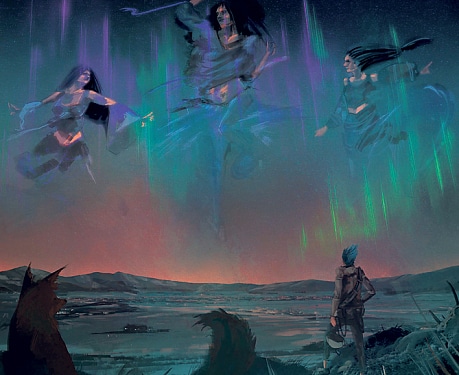
By Charlene Kemp
The Northern lights have intrigued many over the years and has somewhat scared communities to what they believe they represented.
There is also a southern lights which is less reported as it appears in the South pole, which I’m sure if penguins could talk they would tell you the fantastic stories of the displays they have seen.
So here I am going to detail some of the many stories and superstitions from different cultures and communities around the world and what they believed this display of lights represented.
It seems we have been festinated with the lights for many years and It is believed that the northern lights is mentioned in the old testament in the bible.
The Ancient Greeks and Romans
The Northern Lights also known as Aurora Borealis. Aurora Borealis is derived from the Greek Words ‘Aurora’ meaning ‘Sunrise’ and ‘Boreas’ meaning ‘Wind’.
For the ancient Greeks to have even experienced seeing the Northern Lights suggests that some incredibly strong solar activity must have occurred as sightings to this day so far south are almost unheard of.
The Greeks believed that the Aurora was the sister of Helios and Seline, which was the sun and moon. If was believed that she would race across the morning sky in her multicoloured chariot to alert her siblings to a dawn of a new day.
The Romans also linked the northern lights with a new day belief with also associating them to be Aurora, Aurora who they believed to be the goddess of dawn.
North America
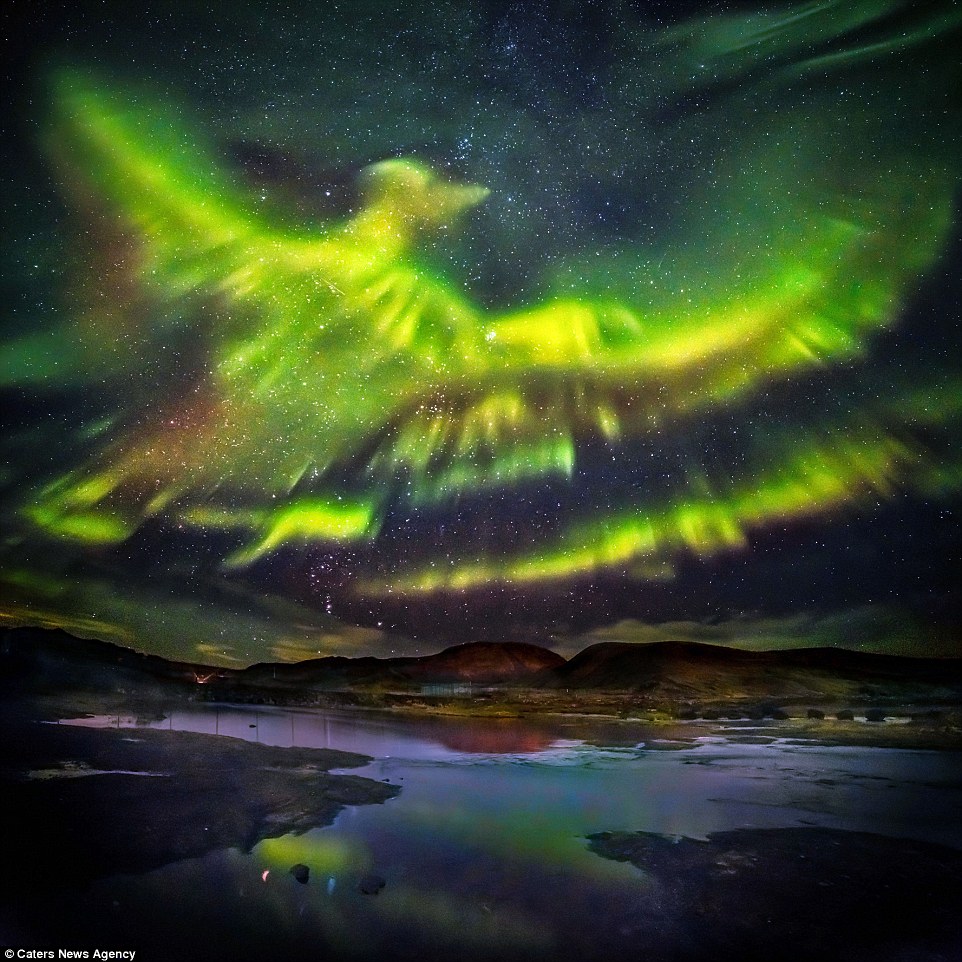
Omen of War – The Fox Indians, who lived within Wisconsin, thought that the lights represented that of war and that the lights was the ghosts of those who was their enemies, they believed that the ghosts of their enemies was that restless that they sent this as a sign for revenge and that they had tried to rise again in order to settle it.
Evil Thing – The Point Burrow Eskimos believed that the lights was evil and carried knifes around with them in order to prevent seeing them.
Spirits of Children – The East Greenland Eskimos believed that the lights represented that of children who had died during birth. They believed that the dancing of the children round and round caused the streamers and draperies of the aurora to constantly move.
Game of Ball – Even though some Eskimos communities had varied belief’s to what the lights was a sign of, Most Eskimo groups believed that it was spirits of the dead playing ball and that they played this with a warus head or skull. A different opinion on this was by the Eskimos of Nunivak, they thought it was Warus spirits playing with a human skull, so even though the same concept it was slightly different on what was potentially being portrayed to them.
Fires in the North – The Mahak Indians of Washington thought the lights was a fire that was occurring in the far north, over which a tribe of dwarfs, half the length of a canoe paddle and so strong that they caught whales with their hands, boiled blubber.
The Stew Pot – The Mandan of North Dakota also believed that the lights was a fire, which the great medicine men and warriors of the northern nations set their dead enemies alight in enormous pots. The Menominee Indians of Winsonsin however, regarded them as torches that was used by great, friendly giants in the northern nations to spear their fish at night.
Creator Reminder
An Algonquin myth of Nanahbozho, believed to be the creator of the earth, travelled to the North after finishing his task of creation, where he remained and built great fires to create reflections, as a signal to his people that he is still thinking of them even though he is so far away.
Europe
Scotland
In Scottish Gaelic Folklore the lights was know as the Na Fir Chlis meaning ‘the Nimble Men’ also known as the merry dancers. It was believed the Northern Lights was epic fights among sky warriors or fallen angels.
Finland
In Finland the Northern lights was known as ‘Revontulet’ which was associated with the arctic fox.
Folk tales of the arctic fox, is that it runs far in the North, touching mountains with its fur, while doing this they believed sparks would fly off into the sky which created the lights.
Another tale with the arctic fox tells the story that the fox throws the lights up into the sky by sweeping snow upwards with its tail, later on a more developed tale was told was that it was actually the moonlights reflection on the snowflakes that caused the lights by the fox’s tail.
Iceland Greenland
It was believed by people living in Iceland that the lights was associated with childbirth and that they would relieve the pain of delivery as long as the expecting mother didn’t look at the aurora while giving birth.
Greenland
In Greenland people believed the lights was also linked to childbirth but it was believed it was the souls of still born babies and babies who was killed at birth.
Sweden
In Sweden the lights was often regarded as a coming of good news. Many believed that the lights was a gift from the benevolent gods providing warmth and light in the form of a volcano which was located in the North. Others believed the lights to be a light reflection from large shoals of herring and bode well for the local fisherman. The Swedish farming community took the lights as a sign that a good harvest was coming in the coming year.
In Norse mythology the lights was often mentioned and one of the legends surrounding them is that it was the lights was reflections or a glow from shields and armour of the Valkyrie. It was thought that it was a sign that female warriors who choose or may have died during battle and who may have lived to fight another day.
It was also mentioned within Norse mythology that the lights was ‘Bifrost Bridge’ a glowing and pulsating arch which could led to those fallen in battle to the warriors, where was their final resting place in Valhalla.
The Baltic States
The Estonians believed the northern lights to be a magnificent horse drawn carriages carrying guests of the heavens to a spectacular celestial wedding.
China
Even though the lights should have been a rare occurrence within china they also must have experience a significant solar event to have witness them, but they were in absolute awe of them and early legends believed the lights was associated with dragons. The main belief was that the lights was fire and that battles was happening between good and evil dragons and while fighting the dragons would roar fire from their mouths.
Japan
The Japanese believed that if a child was conceived underneath the lights that the child would be bless with intellect, good fortune and good looks.
Australia
Aboriginal Australians would have experienced seeing the southern lights and also watched in awe and believed it was their gods dancing overhead.
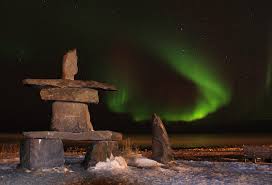
Even though in some communities many have tried to turn to science for an explanation such as ancient greeks who did try to explain it has the sunlight reflecting of the earths surface Even to this day modern day solar scientists admit that there is so much that is still not understood, which in turn continues to fuel stories passed on throughout the world from generation to generation.
St Marks Eve – 24th April – The Old Forgotten Tradition
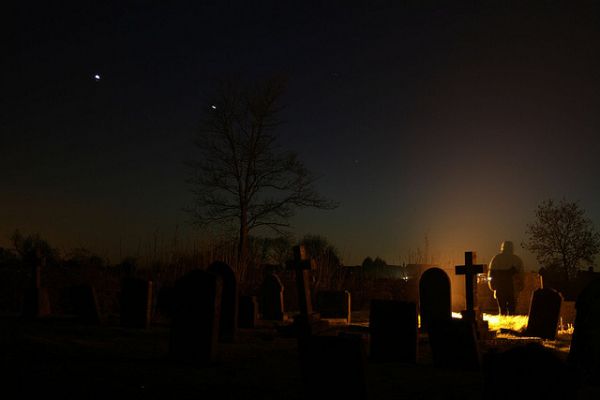
‘Tis now, replied the village belle,
St. Mark’s mysterious eve,
And all that old traditions tell
I tremblingly believe;
How, when the midnight signal tolls,
Along the churchyard green,
A mournful train of sentenced souls
In winding-sheets are seen.
The ghosts of all whom death shall doom
Within the coming year,
In pale procession walk the gloom,
Amid the silence drear.’
What is the History behind St Marks Eve?
A old Tradition lost in time.
The feast day of St Mark the Evangelist (founder of the Church of Alexandria) falls on 25th April, but there are some interesting folk customs that fall on the eve of the feast the 24th April.
Between the 17th and 19th century it was thought that holding a vigil in a church porch during the hours of 11.00pm through to 1.00am on three successive years would reveal the identities of those due to die and be buried in the churchyard over the coming year as an apparition or coffins or headless corpses when the church bell strikes 1AM.
This was a tradition throughout Britain though probably more popular in the North and West. There are some variations on the tradition.
1. Some accounts say this vigil must be repeated each year of your live instead of just three.
2. Others say the exterior of church had to walked around before the vigil begins.
3. And another say that those undertaking the task had to be fasting.
4. Lastly some say just going on this night and partipating in a vigil will able you to see.
Divining For Future Husbands
It was also believed that St Marks Eve was also the time when young maids would try to use divination to discover the identity of their true love and husband to be. One method was to hang their smock before the fireplace and await for the arrival of an apparition of the man your due to marry to come in and turn it for you.
‘On St. Mark’s eve, at twelve o’clock,
The fair maid will watch her smock,
To find her husband in the dark,
By praying unto good St. Mark.’
In North Kelsey, Lincolnshire young women would visit the Maiden Well on St Marks Eve.‘Girls coming to the spring with the view of divination must walk towards it backwards, and go round it three times in the same manner, each girl, meanwhile, wishing the wish that she may see her destined sweetheart. After the third circle is complete, the inquirer must kneel down and gaze into the spring, in which she will see her lover looking up out of the depths.’
(County Folk-Lore by Gutch and Peacock,1908)
Another method of employed by young women was to place a nut by the heath and whisper the name of the man they believe may be their true love. If the nut jumped from the fire then the love was meant to be.
So come and join us on The 24th April 2017, we will be broadcasting live from facebook bwtween 11PM and 1AM.
We will have equipment set up around the porch, Wildlife cameras scattered, a walk round of the area will be shown and we will even have the spirit box going to see what comes through, on The night the veil is meant to be at its Thinest so lets have a go to see what happens.
If you would also like to take part with us or want to take part from another church yard let us no we will do another article with who is taking part and what experiments they have planned.
And please dont forget to send us any evidence you may have collected for our upcoming documentary on it.
https://m.youtube.com/watch?v=kxfJHEb5hLA&feature=youtu.be
Equinox 15: Stocksbridge Bypass. The Legends.

Equinox 15: Stocksbridge Bypass – Introduction. – Please Check It Out.
Stocksbridge Bypass.
The Legends.
As we got together we decided to have a quick look at what information we have connected with the legends around the area of Stocksbridge. We decided to do this to help give us an idea what we could look for or ask about on both the physical and nonphysical plane. Below we will look at the legends we have at hand and as we go along we will research into these legends for any evidence.
Legends From the Net.
We had a look on the internet to see if there were any legends of the Stocksbridge Bypass and what claims were behind them. We obviously found a lot covering this location but what they had in common is the mention of a monk. We found two recurring reasons for the haunting,
- One legend talks…
View original post 501 more words
 Paranormal Magazine UK